

Hair Transplant & Facial Aesthetic Clinic · Kottakkal
Want your lost hair back?
Get a natural-looking hairline with Haircom. DHI, Sapphire FUE and FUE transplants and advanced hair restoration — every hairline designed by the doctor.
- Doctor-ledscalp evaluation & doctor consultation
- DHI · Sapphire · FUEthe right technique for your hair
- Nostitches, no linear scar
- 7 daysopen all days in Kottakkal
Strands of change
Transforming strands, transforming you.
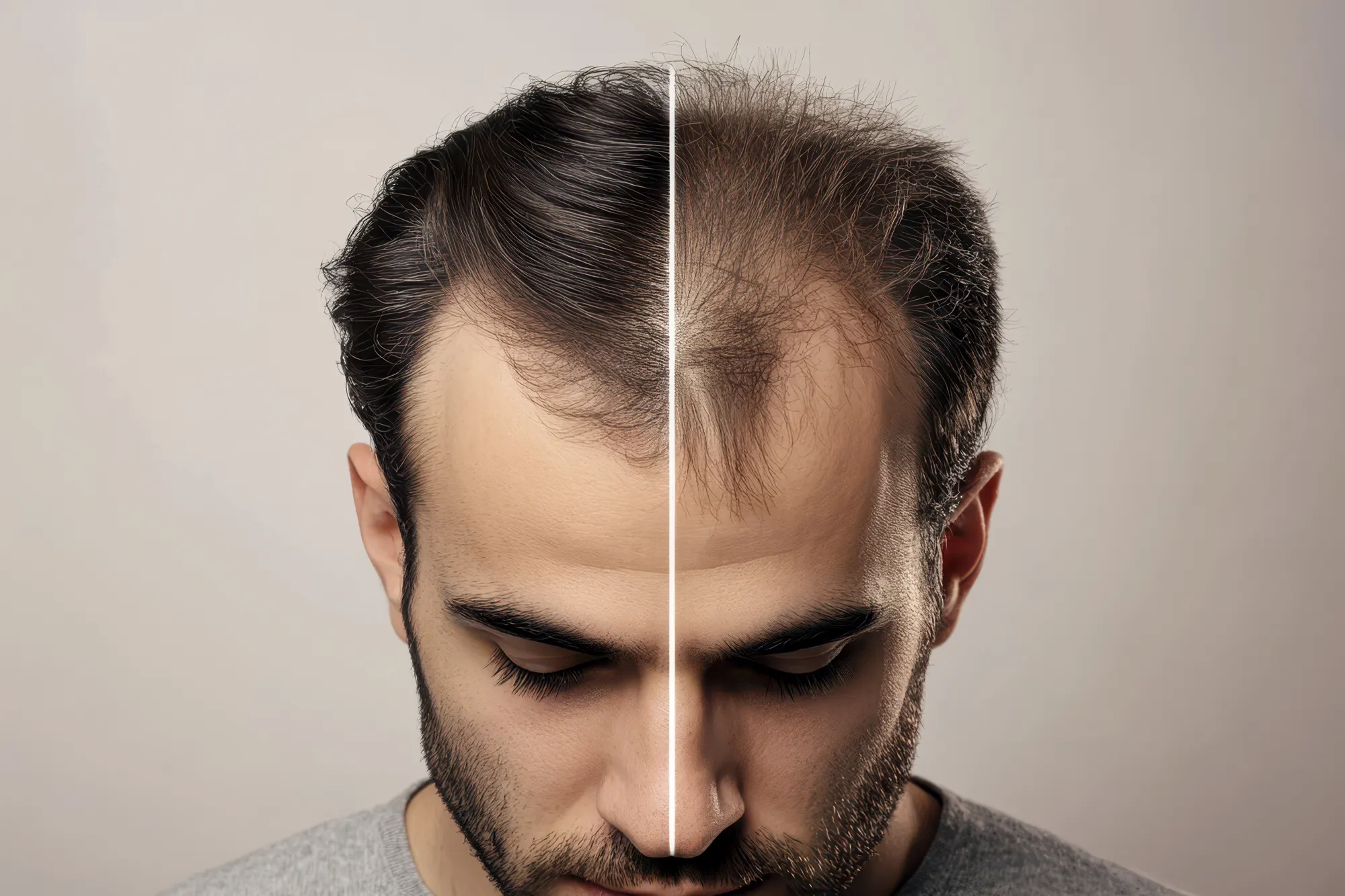
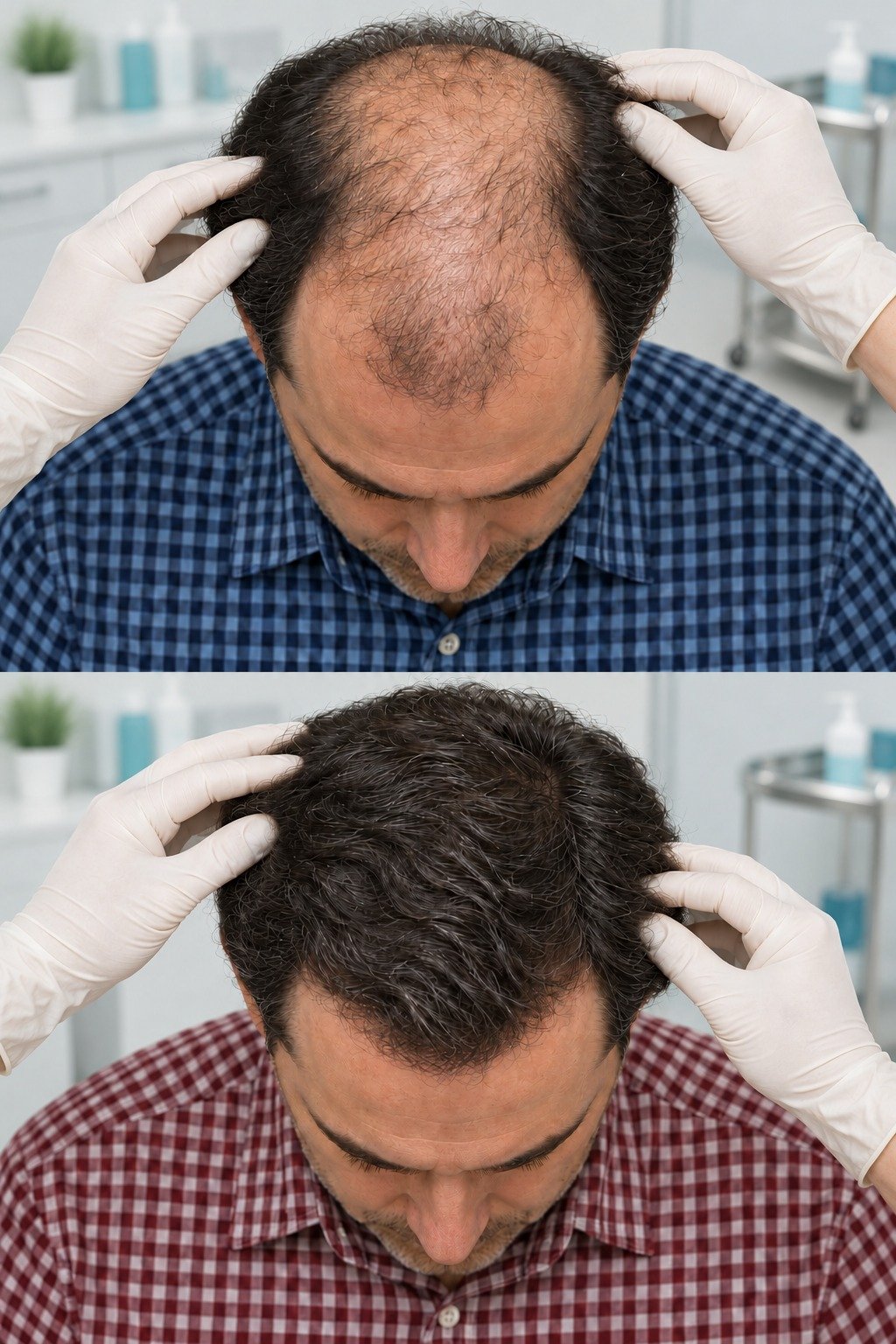
Hair loss changes how you see yourself. A good transplant should give that back quietly — hair that grows, ages and looks like your own, with nobody able to tell where it started.
Haircom is a doctor-led specialist clinic in Kottakkal. Every hairline is designed with millimetre precision, and every follicle is placed — by DHI, Sapphire FUE or FUE — at the natural angle, direction and depth of your own hair.
About Haircom
Treatments
Transplantation & restoration.
Hair transplants by DHI, Sapphire FUE and FUE — with artistic hairline design — and non-surgical restoration with PRP, GFC and exosome-based treatments.
Hair Transplantation
- 01 DHI Hair Transplant Direct Hair Implantation: minimally invasive, no scalpel incisions, no stitches and no linear scar — with full control over every graft’s depth, angle and direction.
- 02 Sapphire FUE FUE with sapphire-tipped blades for finer recipient channels, smoother healing and closer graft placement — ideal for larger areas.
- 03 FUE Hair Transplant Follicular Unit Extraction: individual follicles moved from the back of the scalp to thinning areas, with no linear scar.
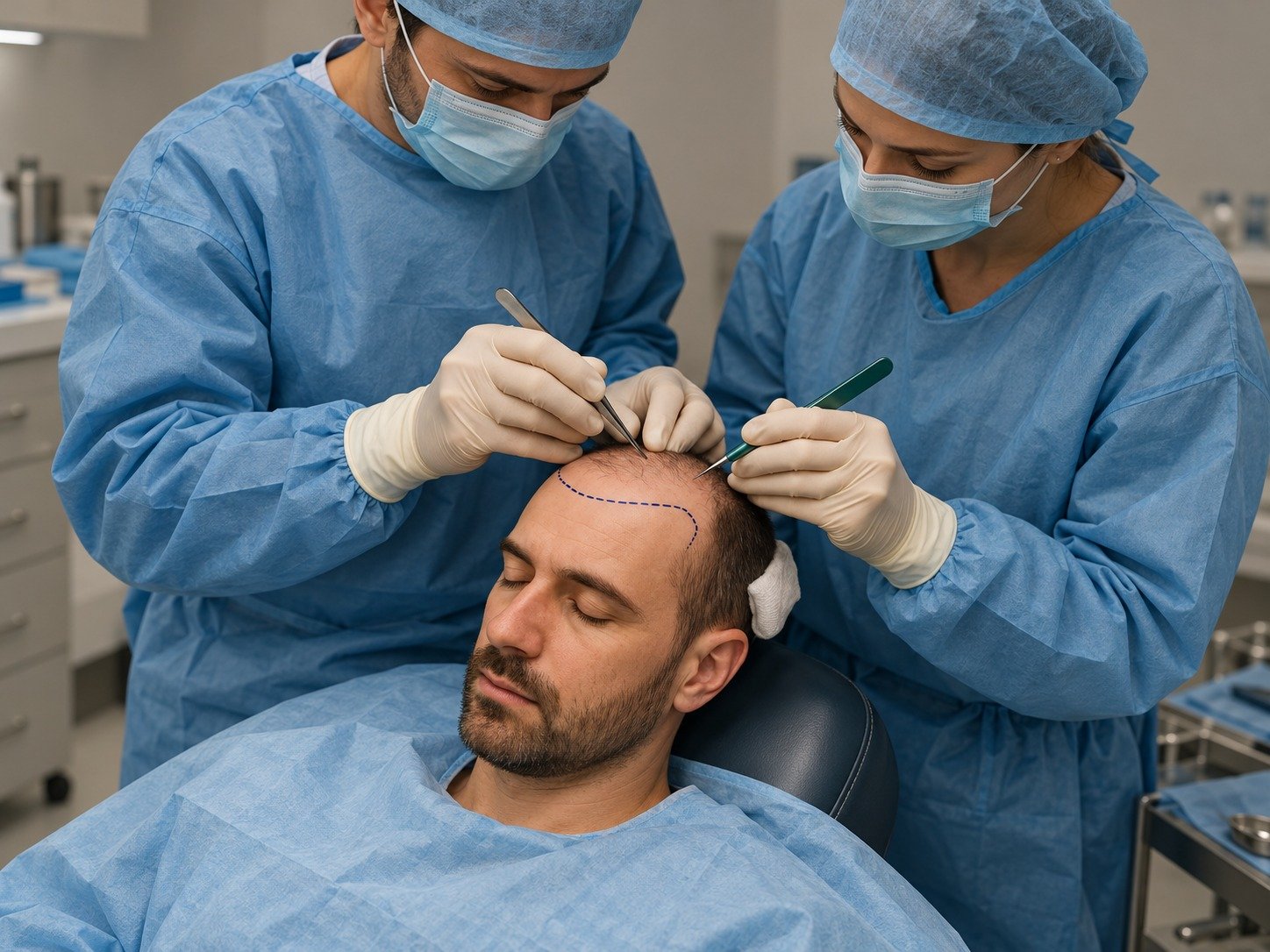
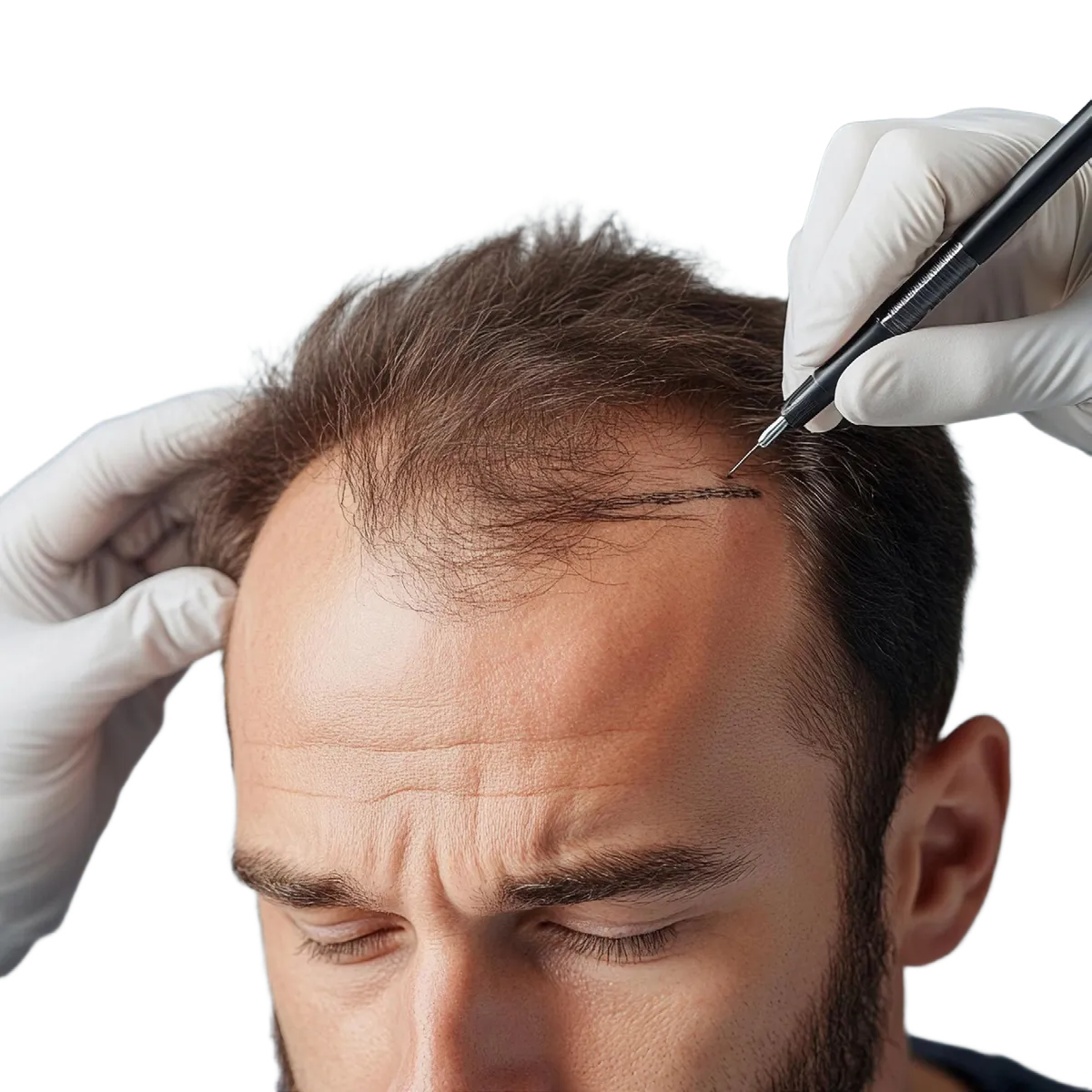
- 04 Hairline Design An artistic, natural hairline designed with millimetre precision for your face, age and future — the most important part of any transplant.
- 05 Beard & Eyebrow Transplant Fill patchy beards, define moustaches and restore thin eyebrows with single-hair grafts placed at the natural angle of facial hair.
Hair Restoration
- 06 PRP Therapy Platelet-Rich Plasma from your own blood to strengthen weakening follicles, slow early thinning and support recovery after a transplant.
- 07 GFC Therapy Growth Factor Concentrate: a refined, concentrated form of the growth factors in your own blood, to nourish follicles and reduce thinning.
- 08 Exosome-Based Treatments An advanced regenerative treatment using exosomes — tiny cell messengers rich in growth signals — to support scalp and follicle health.
- 09 Medical Hair Loss Consultation A doctor-led diagnosis of hair fall and thinning for men and women, with a personalised medical treatment plan.
- 10 Hair & Scalp Assessment A detailed, magnified analysis of your hair, scalp and donor area — the starting point of every Haircom plan.
Choosing a technique
DHI, Sapphire FUE or FUE?
| DHI | Sapphire FUE | FUE | |
|---|---|---|---|
| How grafts go in | Implanted directly with a fine implanter pen — no channels cut beforehand | Fine channels opened with sapphire blades, then grafts placed | Channels opened with steel blades, then grafts placed |
| Best for | Hairlines, temples and thinning areas with existing hair | Larger areas — the top and crown — with even density | Most patterns of hair loss, including large sessions |
| Shaving | Recipient area can often stay unshaven | Usually shaved | Usually shaved |
| Session size | Small to medium | Medium to large | Small to large |
| Stitches & scarring | All three: no stitches and no linear scar — only tiny dots in the donor area, hidden by short hair. | ||

Results
Natural takes time.
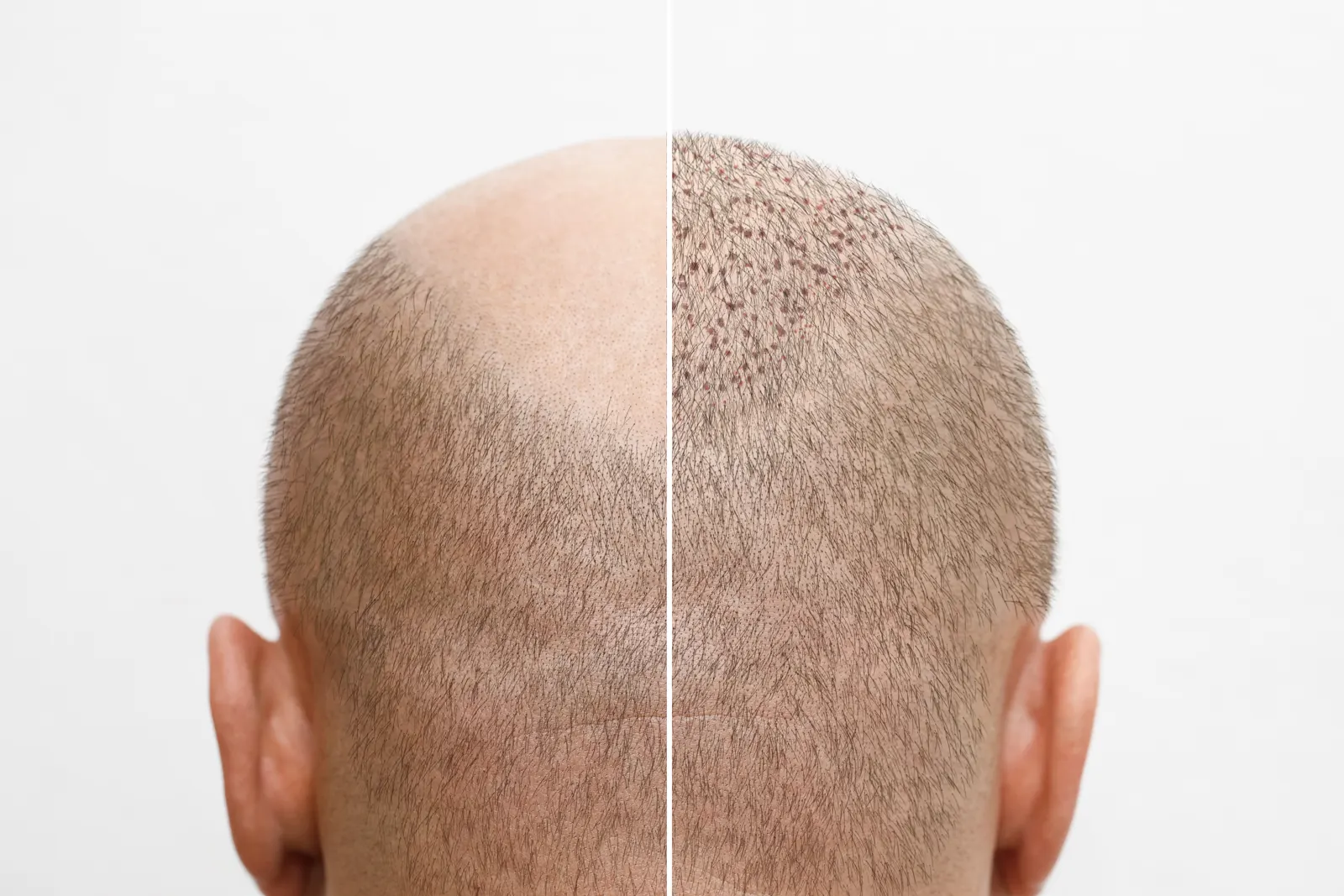
Transplanted hair follows its own growth cycle. Here is what the year after your transplant looks like, from day 1 to month 12.
- Day 1–3Mild tenderness; follow your aftercare routine
- Day 7–14Tiny crusts clear, back to routine
- Week 2–8Transplanted hairs shed — normal
- Month 3–4New growth begins
- Month 6–8Visible density
- Month 12Final, natural result
Graft estimator
How many grafts might you need?
Pick the picture closest to your hair loss, viewed from above. The exact count is confirmed at your scalp evaluation.
Stage 3
Deeper temple recession; the hairline forms an M or U.
1,200 – 2,000 grafts (typical range)
Usually 1 session
A rough guide only. Your actual graft count depends on your donor density, hair thickness and goals, and is confirmed at your consultation.
Send this to the clinic
DOCTOR-LED CARE
Hair Restoration Experts
Hair transplant & hair restoration
Every Haircom treatment begins with a personalised consultation to assess your scalp, donor area and hair loss pattern. We create a tailored hair restoration plan based on your facial features, age and individual needs, with a focus on natural-looking results and long-term hair growth.
- Hair & scalp assessment
- Artistic hairline design for your face
- DHI, Sapphire FUE and FUE under one roof
Your journey
Five steps, no surprises.
- 01
Hair & scalp assessment
At our Kottakkal clinic. Your hair, scalp and donor area are assessed, and you get a clear plan and graft estimate.
- 02
Hairline design
Your new hairline is drawn with millimetre precision and agreed with you — shaped for your face and future.
- 03
Procedure day
DHI, Sapphire FUE or FUE under local anaesthesia. Each graft placed at the natural angle and depth. Home the same day.
- 04
Aftercare
A simple washing and care routine, with PRP, GFC or exosome treatment to support healing where helpful.
- 05
Day 1 to month 12
Progress reviews at the clinic as your new hair grows in, from day 1 to month 12.
DHI, Sapphire FUE or FUE — which is right for me?
It depends on the area, your donor density and whether you still have hair there. DHI gives the most precise control for hairlines and thinning areas; Sapphire FUE suits larger areas like the top and crown; FUE is versatile for most hair loss. Many plans combine them — the doctor recommends the right mix at your assessment.
Do I need a transplant, or will PRP, GFC or exosomes help?
If your follicles are weakening but still there, restoration treatments such as PRP, GFC or exosome-based therapy can strengthen them and slow thinning. Where hair is already gone, a transplant is needed. Your hair & scalp assessment tells you which applies to you.
Does it hurt?
The procedure is done under local anaesthesia, so after the first few injections most people feel only pressure. Mild tenderness for a few days afterwards is usual.
How many grafts will I need, and what does it cost?
It depends on the size of the area, your donor density and your goals. Your graft count and cost are calculated precisely at your scalp evaluation.
When will I see results?
New hair starts growing around month 3–4, density builds through months 6–8, and the final result shows at about 12 months. Results vary from person to person.
Is the result permanent?
Transplanted hair comes from the back of the scalp, which resists pattern hair loss, so it normally lasts. Your existing hair can still thin over time, which is why we may recommend PRP, GFC or exosome treatment to protect it.
Scalp & Hair Evaluation
Book your consultation.
Discuss your hair concerns with our team at our Kottakkal clinic. Get information about suitable treatments, the procedure, expected results, timeline, and cost.